
A tech pack is a shared specification for a garment. It makes design decisions visible to the brand and manufacturer, helping both sides quote, develop samples and agree on what production should match.
Draw the garment clearly
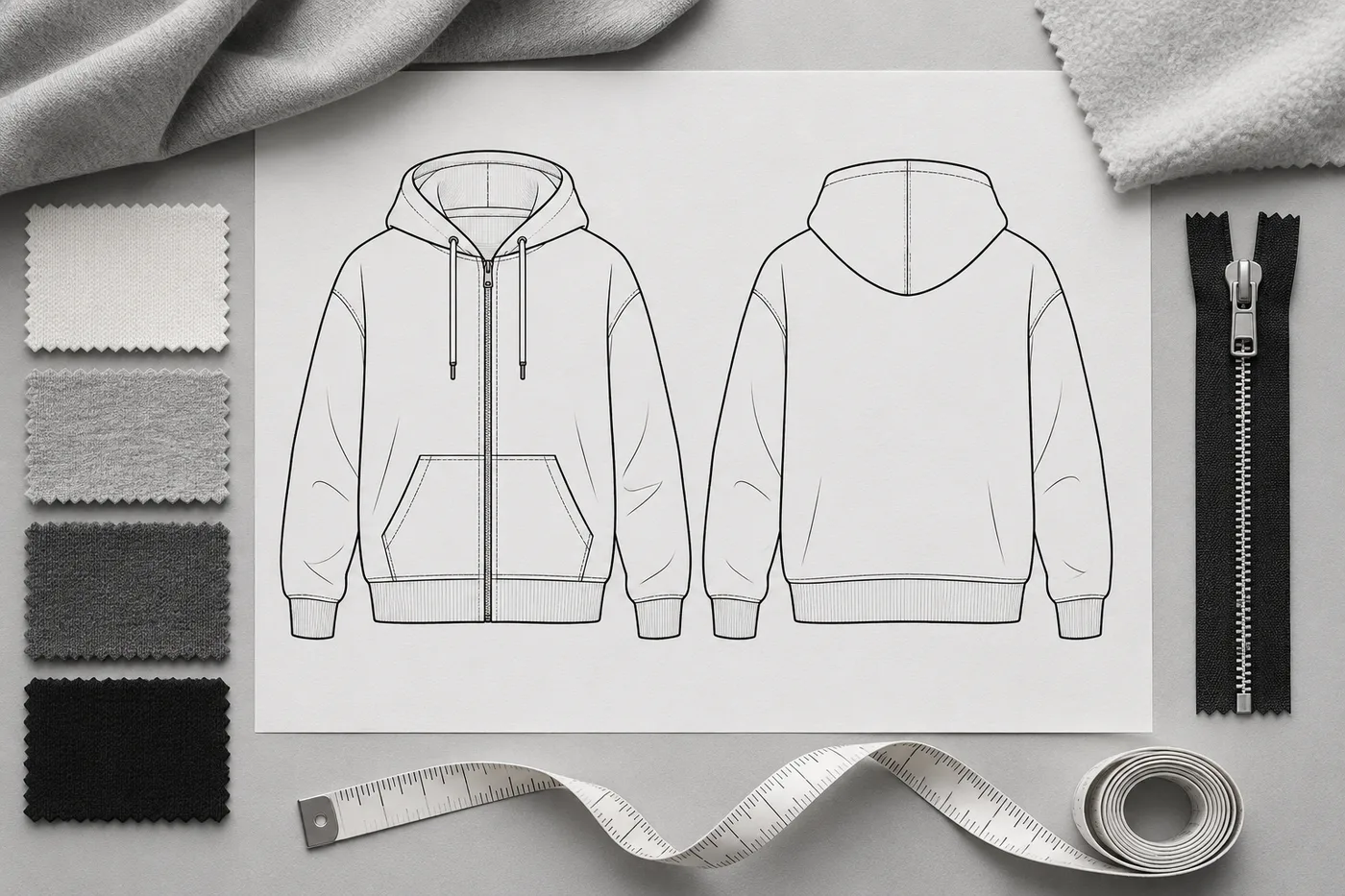
Use flat front and back drawings and add detail views for pockets, seams, hood, zipper and hem. Label each detail and distinguish design intent from a reference image. Include a style name, style code, version and date.
If an existing garment defines the desired fit, photograph it and record the measurements. Explain what should be retained and what should change.
List materials and trims
Create a bill of materials covering the main fabric, rib, thread, zipper, labels and packaging. Record composition, construction, target weight, color and supplier or article number when available. Mark unresolved choices as pending.
For printing or embroidery include the artwork file, colors, dimensions, placement and desired finish. A physical strike-off or sample can help establish the acceptable result.
Add a measurement chart
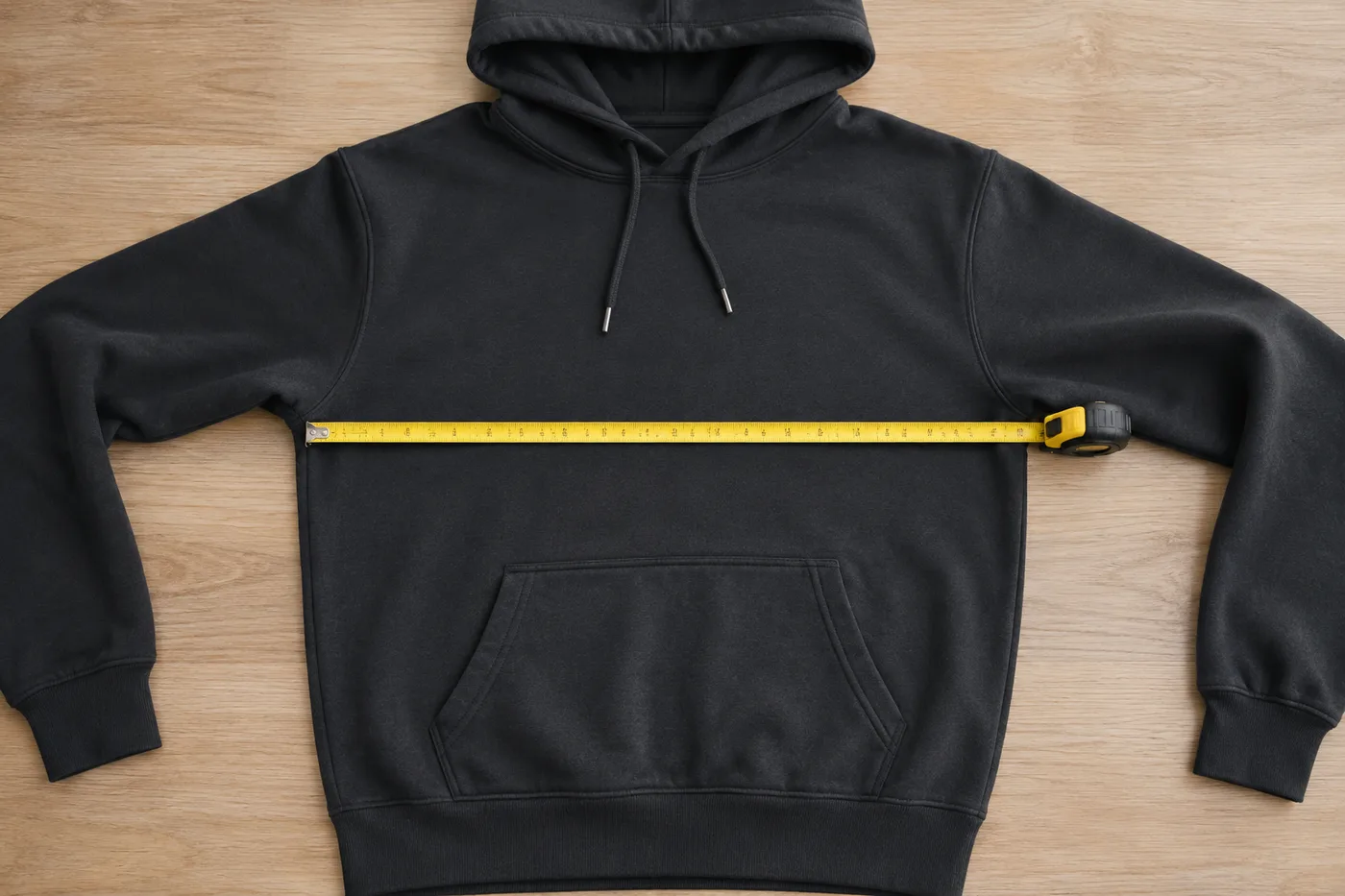
Define each point of measure with a diagram, measurement method, target size and tolerance. Specify whether values are garment measurements, not body measurements. Add a size range and grade rules when they are available.
During fitting, measure the sample in the same way each time and document differences. Record fit comments separately from numerical deviations so the team knows whether to change a pattern or correct execution.
Control revisions and approval
Keep one current version and highlight changes after each sample. Record who approved the fabric, fit, artwork, labels and packaging, and retain a physical reference where possible. Send the latest file and approved comments together.
Before bulk production, review the agreed quantity, color split, quality criteria and shipping details. A tech pack is most useful when it remains current throughout the order rather than being filed away after the first sample.
What the manufacturer needs first
A tech pack is a working product specification, not simply a mood board. It describes what to make, materials and trims, measurements, branding and the approved version. It does not replace a purchase agreement, testing plan or commercial quotation.
Start with brand, style name and code, product type, target market, season, sample size, version, date and contact. Add the intended wearer and fit. An oversized zip hoodie might require a dropped shoulder, boxy body and particular hem shape; identify the details rather than relying on the word oversized.
Mark each unknown as pending and assign an owner. A preliminary pack can support a discussion, but a supplier cannot reliably price every detail until key decisions are made. Record whether a number is a target, approved measurement or assumption.
Planning a custom collection?
Share your references, target quantity and requirements for a project discussion.
Send Your RequirementsMake drawings and construction notes actionable
Include front and back technical flats and enlarged views for the hood, zipper, pockets, cuffs, rib and labels. Number callouts so drawings and notes refer to the same feature. Show topstitching, seam placement and openings where they affect appearance or function.
Specify pocket entry, seam placement and whether the zipper is exposed or covered. Include a cross-section or reference photograph for unusual details. An edited inspiration image does not communicate all dimensions and construction requirements.
If a reference garment establishes the fit, identify what should be retained and what should change. It may establish body length but not sleeve width, or a hood shape but not its lining. Keep the resulting decisions together rather than scattering them across messages.
Build a bill of materials and colorway plan
List the body fabric, hood lining if any, rib, zipper, drawcord, eyelets, thread, labels, hangtags and packaging. Include description, composition, intended color, placement, source and approval status. Add the material article number and supplier where known.
For each colorway, specify which components change. A black hoodie may use matching rib, a contrasting zipper and a different artwork color; a single line saying black can miss those distinctions. Provide physical references where practical and agree how the color match will be assessed.
Record whether fabric is piece-dyed, garment-dyed or washed and how that affects the approved appearance. For printing and embroidery, include editable artwork where available, dimensions, placement, color references and a strike-off approval step.
Document fit, grading and tolerances
Create a point-of-measure diagram and a table for each size. Identify the measuring method, unit, target and tolerance for each point. For chest width, show exactly where to measure, whether the garment is relaxed and whether the value is a flat width or circumference.
Discuss grade rules with the pattern maker. Applying the same change to every measurement can produce unintended proportions. Review additional sizes where the garment or target market makes it necessary.
A tolerance is an agreed permitted deviation, not a change to the target. As an illustration, a target of 60 cm with an agreed tolerance of ±1 cm has an acceptance interval of 59 to 61 cm at that point. The appropriate tolerance depends on the fabric, measurement point and agreement; do not copy this example as a universal standard.
Use sample reviews to resolve decisions
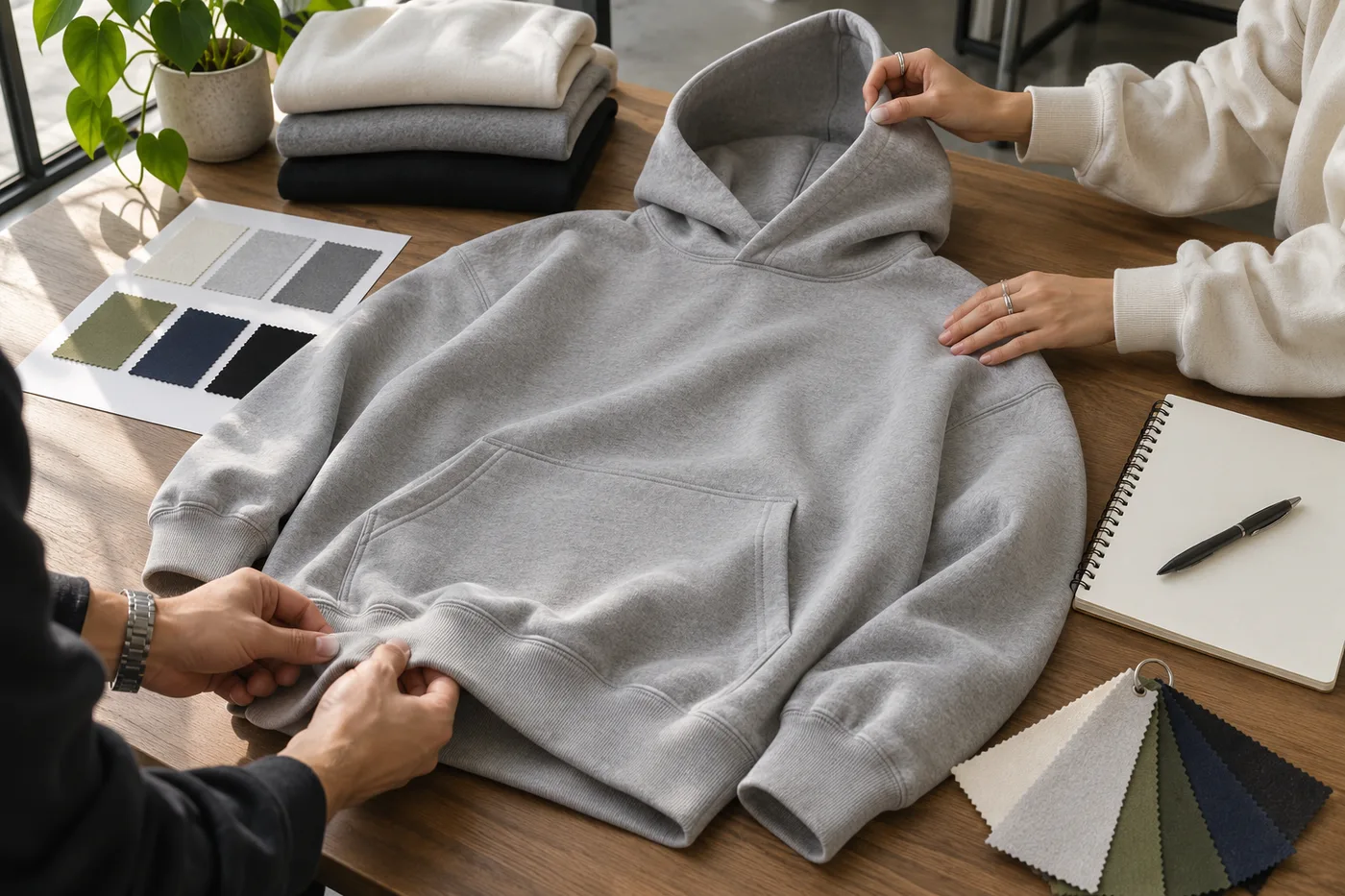
A fit sample helps review pattern and shape. A later pre-production sample should represent the approved fabric, trims and artwork as closely as practical. Ask what each sample will and will not represent, and track sample cost and timing separately from bulk production.
Measure the sample against the same chart, photograph its front, back and important details, and test fit on the intended wearer. Record each finding with its measurement point or callout and a requested action. Separate a design preference change from a manufacturing deviation so both sides understand potential effects on price and timing.
For example, a hypothetical review might find that the chest meets its target but the sleeve looks too long on the intended wearer. A new revision can change the sleeve target while preserving the chest measurement. This illustrates the process and is not a claim about a specific client project.
Prepare approval, packing and shipment records
Before bulk approval, confirm the current pack version, physical sample, material references, strike-offs and deviations. Agree the size and color split, tolerances, test methods, inspection plan and responsibility for corrections. Document any post-approval change and its effect on cost and timing.
Add label artwork, placement and packing instructions, then review destination-market requirements with the responsible importer. US care-label requirements apply to covered garments and require a reasonable basis for the instructions; obligations vary by product and market.
For shipment inspection, reconcile packing instructions, carton marks and quantities with the order. A tech pack can link to commercial and quality records, but is not proof that a shipment passed inspection. Retain reports and approvals for future orders.
Frequently asked questions
Can I request a quote without a finished tech pack?
Yes. Share the information you have, but expect a preliminary quote to change as specifications are finalized.
What file format should artwork use?
Ask your supplier which formats suit the decoration method. Editable vector files are useful for many logo applications; detailed graphics may require high-resolution raster files.
Conclusion
A useful tech pack turns your design into decisions that can be reviewed, measured and approved. Start with the information you have, identify open questions and maintain one current revision throughout sampling and production.