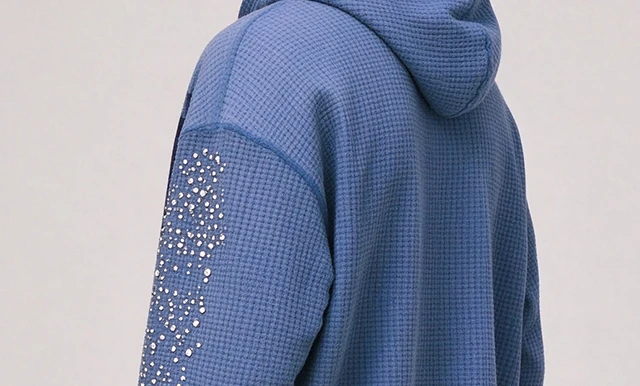
The right hoodie fabric depends on the intended fit, climate, price point and finish. GSM describes fabric mass per square meter; it is useful for comparison but does not independently guarantee warmth, softness or quality.
What does GSM tell you?
GSM measures fabric mass per unit area. A heavier fabric may create more structure, but yarn, knit density, fiber blend and finishing also influence drape and comfort. Compare swatches of the actual construction rather than specifying weight alone.
For a structured streetwear hoodie, a brand might evaluate several medium-to-heavy swatches and choose after fit and wash trials. There is no universal best weight for every design or market.
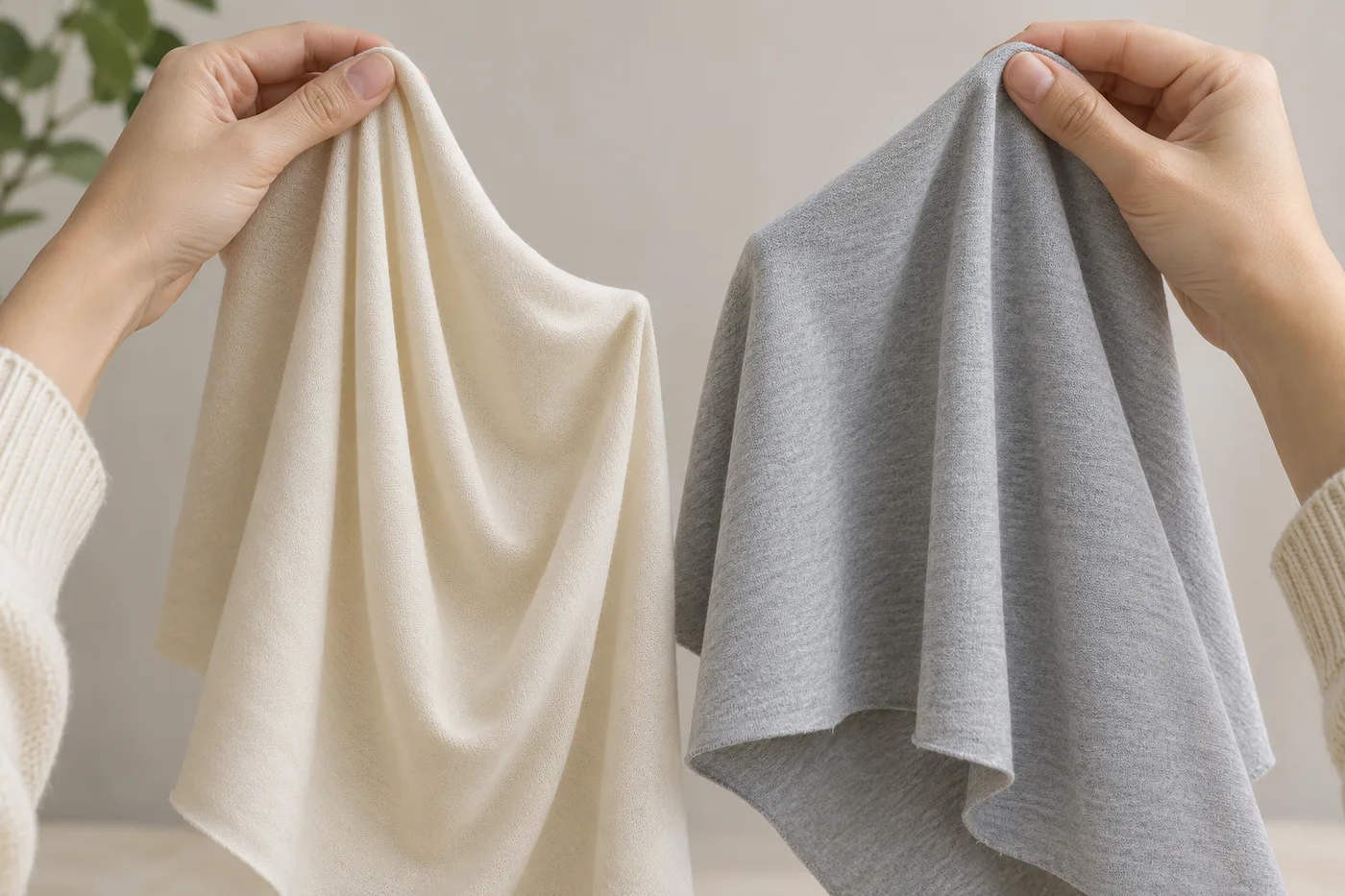
French terry versus fleece
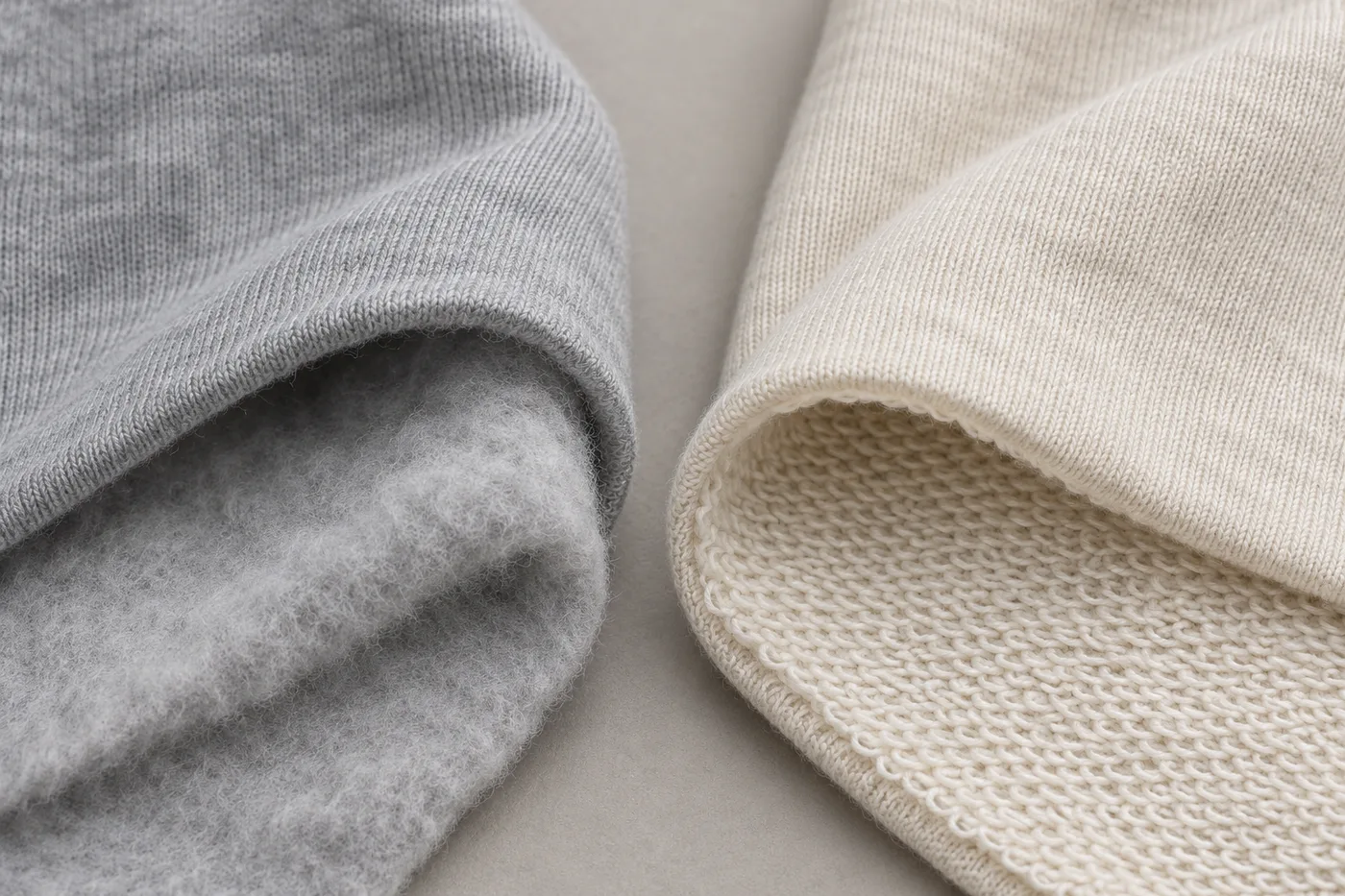
French terry usually has loops on the inside, while brushed fleece has a raised inner surface. The loops can give a more defined feel; brushing can create a softer, warmer hand. Actual performance depends on the specific fabric and finish.
Consider the garment’s intended season and climate. Ask for both swatches in the target composition and color, then compare drape, surface appearance and feel after the intended care process.
Choose fiber and finish together
Cotton-rich fabrics and cotton-polyester blends can differ in hand feel, recovery and care. The proportion alone does not explain quality: yarn type, construction and finishing matter. If stretch is required, review the effect of elastane and rib composition on fit and recovery.
A garment wash, pigment effect or print may change the final appearance or feel. Confirm the finish on a representative sample and define acceptable color variation before bulk production.
Evaluate before production
Request the fabric specification and, where relevant, test reports for dimensional stability, colorfastness and pilling using agreed methods. Record the test method, conditions and acceptance limits; results from different methods are not directly interchangeable.
Measure the approved garment before and after the agreed wash test. Check the body, hood, rib and print together, because components may respond differently. Keep the approved swatch and sample as the reference for the order.
Planning a custom collection?
Share your references, target quantity and requirements for a project discussion.
Send Your RequirementsBegin with the wearer and the use case
A hoodie for an indoor year-round uniform has a different job from a structured winter streetwear piece. Describe the climate, intended layering, retail position and desired silhouette before choosing a number. Decide whether the wearer should experience a soft drape, a firm shape, a brushed interior or a smoother surface.
For a boxy fit, body width, shoulder placement, sleeve shape and length matter alongside fabric. The same knit can look oversized or fitted depending on the pattern. Compare samples on the intended wearer and review how the hood, sleeves and hem behave when moving and sitting.
A heavy fabric suitable for a pullover may require different zipper support, pocket construction and rib for a zip-up. Ask for a representative sample of each construction rather than assuming that one material automatically works equally well across the collection.
Specify GSM without reducing fabric to one number
GSM means grams per square meter, a measure of mass per area. As an illustration, one square meter of material specified as 350 GSM has a nominal mass of 350 grams, subject to the agreed measurement method and tolerance. It is not the weight of a finished hoodie, which also depends on size, pattern, rib and trims.
Use lighter and heavier swatches to narrow the choice, but treat ranges as screening tools. A heavier fabric can feel less rigid than a lighter one if yarn and knit construction differ. Ask whether the stated weight applies before or after washing and finishing, and confirm the tolerance.
Compare swatches at the same finishing stage and under similar conditions. Photographs support communication, but physical handling and a garment sample are better for deciding hand feel. Review a substitute as a new material; matching GSM does not guarantee matching performance.
Consider fiber, rib and finishing together
Cotton contributes a familiar hand feel and absorbency; polyester may be used in blends to change recovery, drying behavior or cost. Neither a cotton-rich label nor a blend percentage alone predicts quality. Yarn type, knitting and finishing also matter, so compare actual materials for the intended use.
Rib is a separate component. Confirm its composition, weight, color match and recovery, and check it with the body fabric after washing. A body swatch cannot resolve a stretched cuff or waistband that pulls the garment out of shape.
A garment wash or pigment effect can change appearance and hand feel. Agree on a color reference, assessment conditions and acceptable variation using representative samples. Review artwork on the finished fabric, especially if decoration and washing occur in different sequences.
Build a testing plan for the application
Agree on properties that matter, such as dimensional change after laundering, colorfastness, pilling, seam strength or print durability. Select suitable recognized methods with the supplier or a qualified laboratory, and agree on acceptance criteria before testing. A method number without conditions and limits is not a complete specification.
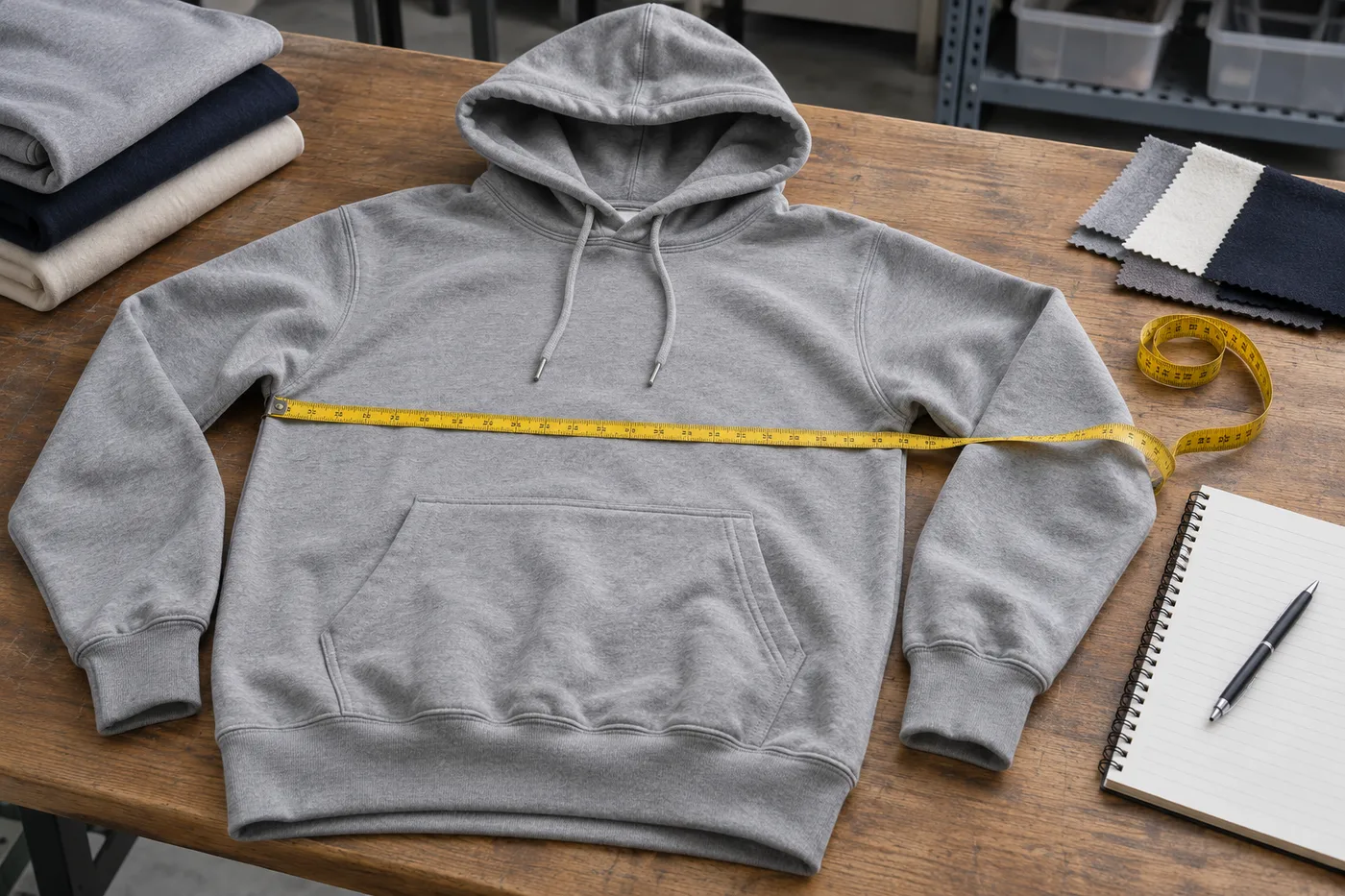
For a practical wash review, record dimensions at defined points, follow agreed wash and drying conditions, condition the garment as specified and measure again. Compare the body, sleeve, hood and rib. If measurements change, determine whether pattern, fabric finishing or care guidance needs adjustment.
Keep the test sample, report, batch reference and date together. CottonWorks notes that manufacturing processes can influence shrinkage; a result for one sample is not proof that every future batch will perform identically. Discuss incoming-material checks and further testing appropriate to the order.
Protect consistency on repeat orders
Record the fabric article number, fiber content, construction, finish, rib and approved color along with the approved sample. For decoration, retain the strike-off, artwork version and placement. When the original material is unavailable, review and approve the proposed replacement before production.
Review any test reports in context: check the sample identity, test method, date, conditions and results against the project requirements. A report may describe a specific sample rather than the entire production run. Discuss the scope of checks before placing the repeat order.
Frequently asked questions
Is higher GSM always better?
No. Higher weight can add structure, but comfort and suitability depend on construction, finishing and the intended use.
Which fabric is best for an oversized fit?
The answer depends on the desired drape and pattern. Compare physical swatches and fit samples at the intended measurements.
Conclusion
Choose fabric as a system: fiber, yarn, knit, weight, finish, rib and pattern all affect the finished hoodie. Compare representative swatches and garments, agree on testing and keep an approved reference for bulk production.